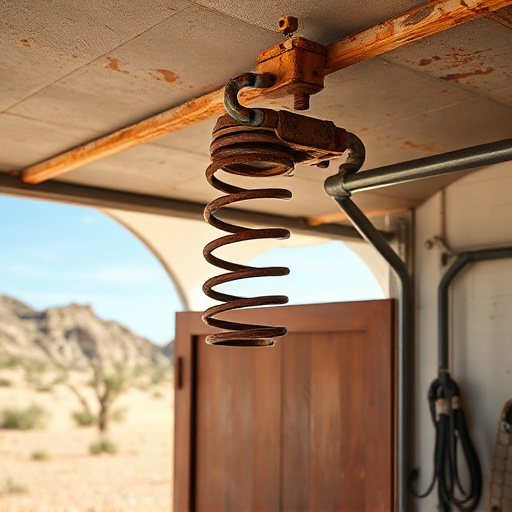
Garage door springs are the unsung heroes of our daily commutes, yet their failure can cause significant headaches. Understanding torsion vs extension springs is crucial for Tucson homeowners, as these types serve distinct door weights and styles. A broken spring can leave your door stuck or completely off its tracks, posing safety risks and potentially damaging your vehicle. This article examines the differences between torsion and extension springs, explaining how they accommodate various door sizes and weights. By the end, you'll grasp why replacing both springs simultaneously is often recommended, especially in the Tucson heat that accelerates spring wear. We'll also explore the safety features, maintenance tips, and cost considerations related to these vital components.
- Understanding Spring Types: Torsion vs Extension
- Key Differences: Function, Installation, and Applications
- Choosing the Right Spring: Factors and Use Cases
Understanding Spring Types: Torsion vs Extension
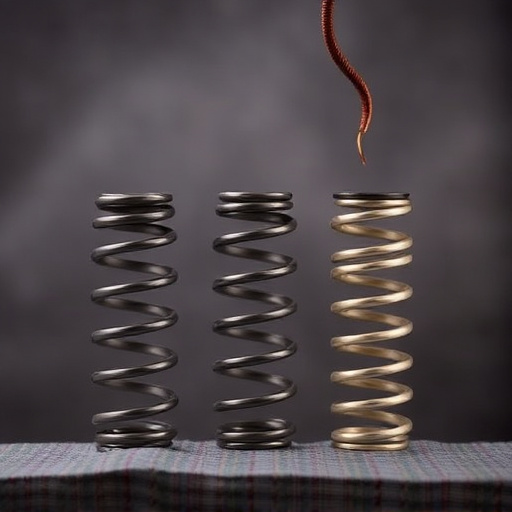
Torsion and extension springs are the unsung heroes of garage door mechanics, each playing a unique role in the door's operation. The primary difference lies in their design and application. Torsion springs, often found in larger, heavier garage doors, are coiled in a vertical configuration. They store energy by twisting around a shaft, allowing them to lift the door's weight with ease. This design makes them ideal for high-cycle doors, ensuring consistent performance even with frequent use. On the other hand, extension springs are horizontal coils that stretch to lift the door. Common in smaller residential doors, they are known for their ability to provide a smooth, controlled descent, making them safer and more energy-efficient.
When considering a garage door spring replacement, understanding these types is crucial. An experienced Tucson garage door installer recommends evaluating your door's weight and use. A two-car door with multiple opening and closing cycles daily may require a torsion spring, while a single-door with lighter use could benefit from an extension spring. The choice depends on the door's balance system, with some designs better suited to torsion springs due to their center bearing configuration.
Vail, a leading manufacturer, offers a range of extension springs designed for specific door weights and styles, ensuring optimal performance and safety. Conversely, extension spring safety cables, a critical component in their design, add an extra layer of protection against unexpected failures. In contrast, torsion springs, while powerful, may require periodic lubrication to maintain smooth operation and prevent rust and corrosion, especially in Tucson's hot climate.
Key Differences: Function, Installation, and Applications

Torsion and extension springs serve different functions in garage doors, leading to distinct installation processes and applications. Torsion springs, housed in a cylindrical tube at the door's header, bear the brunt of the door's weight and are designed to handle heavy loads. They're ideal for large, heavy doors and provide a smooth, balanced opening. On the other hand, extension springs attach to the bottom of the door and stretch as the door opens, counteracting the weight and keeping it from slamming. These springs are more common in lighter doors.
Installation differs greatly between the two. Torsion springs are pre-tensioned at the factory and require a special tool for adjustments, making them less accessible for DIY repairs. Extension springs, however, can be adjusted and replaced by experienced DIYers, though safety cables must be properly installed for stability. In Marana, a local Tucson garage door technician recommends against attempting torsion spring repairs without proper training, citing the risk of severe injury from the high tension.
The choice between torsion and extension springs ultimately depends on the door's weight and the desired performance. Torsion springs excel in heavy door applications, while extension springs offer a cost-effective solution for lighter doors. A door weighing over 200 pounds might require torsion springs to ensure safe and efficient operation, whereas a residential door under 150 pounds could benefit from extension springs. Both types require regular maintenance, including lubricating the springs to reduce friction and rust, and checking for signs of wear, such as a broken spring or unusual noise.
Choosing the Right Spring: Factors and Use Cases

When choosing between torsion and extension springs for your garage door, understanding their distinct characteristics is key. Both serve the critical function of providing tension and balance, but they do so in different ways. Torsion springs, housed inside a spring tube, use a series of coils to store energy, making them ideal for heavier doors. They offer a smooth, even lift, and their center bearing ensures low friction during operation. On the other hand, extension springs, found at the top of the door, rely on a linear coiling mechanism. These springs are often chosen for lighter doors, providing a quick, strong lift. They are also more affordable and easier to install.
The decision between these spring types depends on several factors. If your door is particularly heavy, an oil-tempered torsion spring, known for its strength and durability, might be the better choice. Conversely, for lighter doors, an extension spring with a powder-coated finish, offering rust resistance, could be preferable. A garage door company serving Tucson and Oro Valley often encounters these choices, as door weight and local climate play significant roles.
Another distinction lies in the number of springs required. Most single-car garage doors use one torsion spring, while two springs-one on each side-are typical for double-car doors or doors with larger spans. This setup enhances stability and reduces the risk of spring failure on heavier doors. Regular spring maintenance, including lubricating the coils, is also crucial, especially in high-cycle environments. Proper attention to these details ensures your door operates safely and smoothly for years to come.
Frequently Asked Questions About an explainer on torsion and extension springs and how they differ
What is the difference between a torsion spring and an extension spring?
Torsion springs store energy by twisting around a shaft, while extension springs store energy by stretching. Torsion springs are typically used for opening and closing garage doors, as the twisting action provides consistent force throughout the door's cycle. Extension springs, on the other hand, are commonly found in windows, gates, and other applications where the spring is pulled out to provide tension.
How do torsion springs work in garage doors?
When a garage door opens, the torsion spring winds down, storing energy. As the door closes, the stored energy releases, helping to return the door to its upward position. This makes the door easier to operate and reduces the physical effort required. The spring's strength and balance are critical for smooth, safe door operation.
What factors determine the size or strength of a spring?
The size and strength of a spring depend on several factors, including the expected load, the desired amount of force, and the physical space available. Higher load applications, like heavy garage doors, require stronger springs. Spring manufacturers use wire gauge to denote strength; lower gauge numbers indicate stronger springs.
How often do garage door springs need to be replaced?
While the lifespan varies, garage door springs typically need replacement every 5,000 to 10,000 cycles, or about 7 to 14 years. However, factors like regular maintenance, quality of installation, and environmental conditions can impact this timeframe. Regular inspections by a licensed Tucson garage door service can help identify wear and tear.
Are there safety considerations when dealing with springs?
Absolutely. Springs are under immense tension, posing potential safety hazards. Never attempt to adjust or replace a spring yourself unless you are a trained professional. Always wear appropriate safety gear and contact a licensed garage door technician in Tucson for any spring-related issues.
How do I know if I have a torsion or extension spring?
The best way to identify the type of spring is by its placement and function. Torsion springs are usually located inside a cylindrical housing above the garage door, while extension springs run parallel to the door and connect it to the opening mechanism. Their purpose also differs: torsion springs control the door's movement throughout the cycle, while extension springs provide the initial lift when opening.
Understanding the distinction between torsion and extension springs is crucial for any Tucson homeowner or garage door service professional. Torsion springs, with their distinct coils, are known for their high cycle ratings, making them ideal for heavy doors and demanding environments. On the other hand, extension springs, with their linear design, offer precise control and are commonly used in lighter door applications. When considering replacement, it's essential to factor in door weight, climate conditions, and specific safety requirements. Oil-tempered springs may be preferable in hotter Tucson climates due to their resistance to rust and corrosion, while galvanized springs can provide a cost-effective solution. By carefully evaluating these factors, homeowners can ensure the longevity and safety of their garage doors, preventing costly repairs or accidents. Next steps include consulting with local experts, like Eddies Garage Door Service, to determine the best spring type and size for individual door needs.
Torsion and extension springs, while both crucial for garage door function, differ significantly. Torsion springs, housed in a tube, twist to store energy, ideal for heavy doors; extension springs, horizontal coils, stretch to lift, suitable for lighter doors. Choice depends on door weight, use, and balance system. Torsion springs require professional installation, lubrication, and regular maintenance; extension springs are more DIY-accessible. Both types ensure door stability, safety, and smooth operation.