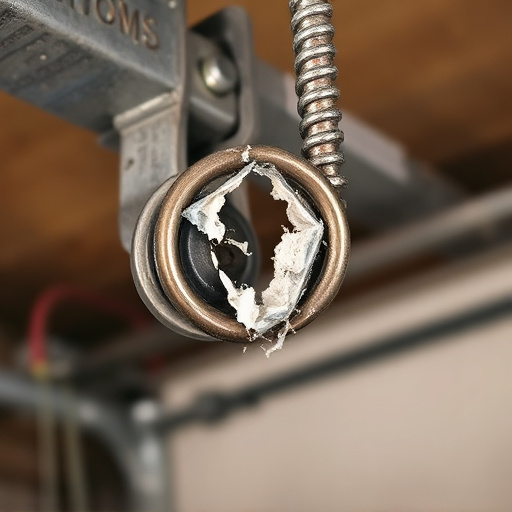
In the world of garage door maintenance, understanding the inner workings of your springs is crucial. Springs, whether torsion or extension, are the unsung heroes that keep your door securely in place. However, over time, these essential components wear out, leading to a common problem: a broken spring. Recognizing when a spring is failing is key to ensuring safety and preventing costly damage. This article examines the differences between torsion and extension springs, explains why both often need replacement, and guides you through the process-including how long spring repair typically takes-to keep your Tucson garage door functioning smoothly and securely.
- Understanding Torsion and Extension Springs
- Key Differences: Function and Installation
- How Long Does Spring Repair Take?
Understanding Torsion and Extension Springs
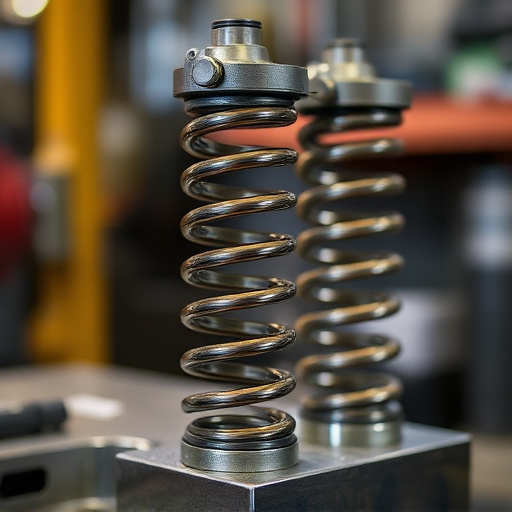
Torsion and extension springs are the unsung heroes of your garage door's operation, responsible for both the door's lift and its stability. They work in tandem to ensure a smooth, balanced opening and closing. The key difference lies in their design and application:
Torsion springs, often found on larger, heavier garage doors, are coiled steel springs that store energy around a horizontal axis. They handle the majority of the door's weight, providing strong, consistent force. Extension springs, on the other hand, are typically used on lighter doors and work vertically. They assist the torsion spring by providing an additional, gradual force as the door lowers.
Choosing the right spring depends on your door's weight. Heavier doors require a sturdier torsion spring, while lighter doors benefit from the efficiency of extension springs. In the desert heat of Tucson, springs can fatigue faster. A family run Tucson garage door business recommends regular inspection to identify signs of wear, such as a distinct broken spring sound or visible rust and corrosion. Given the critical role they play, it's crucial to replace both springs simultaneously if either shows signs of failure. This ensures optimal door balance and safety. Spring repair, while sometimes DIY-able, often requires professional expertise, especially for complex installations. Most repairs take one to two days, with the specific time depending on the door's size and the springs' condition.
Key Differences: Function and Installation
Torsion and extension springs serve distinct functions in garage doors, leading to key differences in installation and performance. While torsion springs, often characterized by their coiled tube design, support the door's weight and allow for smoother opening and closing, extension springs stretch and contract to balance the door. The former is typically used in heavier doors, where a strong, constant force is required, while the latter is suitable for lighter doors, offering a more cost-effective solution.
Installation varies significantly between these two types. Torsion springs are mounted above the door, hidden from view, and connected to a system of tubes and cables. This configuration distributes the door's weight evenly, enhancing safety and stability. Extension springs, on the other hand, are installed alongside the door track, below the door, and attach to the door's bottom bracket. Their exposure makes them more susceptible to environmental factors like rust and corrosion, especially in regions like Vail, where weather fluctuations can accelerate these issues.
Consider the time investment when comparing torsion vs. Extension springs. Replacing a torsion spring often requires specialized tools and knowledge, making it a more involved process that can take a local Tucson garage door technician around one to two days. Extension spring replacements, while still needing care, are generally quicker and more straightforward, with some basic DIY methods available for lighter-duty installations. Spring length is a critical factor here; longer springs allow for greater door weight support but also take up more space, which can be a design consideration.
The choice between torsion and extension springs depends on your door's weight, aesthetic preferences, and budget. Understanding these differences is crucial for ensuring your garage door operates safely and efficiently, with proper maintenance and timely repairs extending their lifespans, whether you're dealing with a single or double spring system.
How Long Does Spring Repair Take?

Spring repair times vary based on the type of spring, the complexity of the repair, and the overall condition of your garage door system. Understanding the differences between torsion and extension springs is crucial in estimating how long a spring repair will take. To begin, extension springs are commonly used in residential garage doors and typically offer a swift repair process. Replacing one usually involves removing the old spring, measuring for a new one, and installing it with the aid of special tools. This process generally takes a skilled technician around one to two hours for a single-door setup.
On the other hand, torsion springs, often found in larger, commercial, or double-door garage systems, present a slightly more intricate repair scenario. These springs operate in a different manner, using a cylindrical spring to balance the door. Replacing a torsion spring necessitates safety precautions due to the spring's high tension. The process includes loosening the spring's center tube and removing the old spring. Installation of a new torsion spring requires threading the new spring onto the tube, ensuring proper tensioning, and re-attaching the door's balance system. This intricate work can extend the repair time to two to three hours for a two-car door or complex setup, even for an experienced technician.
When considering the time frame for spring repairs, it's essential to differentiate between single and double springs. Double springs, as the name suggests, support a heavier door by sharing the load. Replacing a double spring typically involves similar steps as a single-spring repair but is more time-consuming due to the extra spring and the need for precise adjustments to maintain door balance. Eddies Garage Door Service in Marana, for instance, may charge slightly higher rates for double-spring repairs to account for the increased labor required.
The Tucson heat can also play a factor in spring longevity and repair duration. High-temperature environments can cause springs to wear out faster, necessitating more frequent repairs. When dealing with such conditions, technicians may recommend regular spring inspections to catch potential issues early, thus preventing more extensive repairs or even spring failure.
Frequently Asked Questions About an Explainer on Torsion and Extension Springs and How They Differ
What are torsion springs, and how do they work?
Torsion springs are helical springs that store energy when twisted. In garage doors, they typically mount on the overhead track, providing the majority of the lifting force. As the door lifts, the spring twists, and the stored energy helps to balance the door's weight, making it easier to open and close. This design allows for smooth operation and helps to absorb impact energy, ensuring a safer closing sequence.
How do extension springs differ, and where are they used?
Extension springs, in contrast, work by straightening out under tension. They are often seen in applications like garage doors, where they assist in opening and closing by providing a counterbalance to the door's weight. Unlike torsion springs, extension springs are installed vertically, with one end attached to the door and the other to the overhead track or a bracket. They are crucial for ensuring the door closes smoothly and safely.
Which type of spring is better for a residential garage door?
The choice between torsion and extension springs depends on various factors, including door weight, style, and the homeowner's preferences. Torsion springs are generally recommended for heavier doors as they can handle more weight and offer better safety features. Extension springs are suitable for lighter to medium-weight doors and are often a cost-effective solution. A licensed Tucson garage door specialist can assess your specific needs and provide the best recommendation.
Do I need to replace both springs at the same time?
While it's not always necessary to replace both torsion springs simultaneously, it's often recommended. Since they work in tandem to balance the door, if one spring fails, the other may follow shortly. Replacing both ensures optimal performance, safety, and longevity for your garage door system. Most installations take one to two days, depending on the complexity of the door.
How do I know if my garage door springs need replacement?
There are several signs indicating that your garage door springs may require replacement:
- Noisy Operation: If your door makes squeaking, popping, or banging noises during opening or closing.
- Door Off-Track: When the door doesn't stay aligned with the track or drifts to one side.
- Difficulty Opening/Closing: Struggling to lift or lower the door, or the door's position is challenging to adjust.
- Spring Breakage: Visible signs of damage or spring coils that have unwound.
If you notice any of these issues, contact a local garage door company like Eddies Garage Door Service for a professional assessment.
Understanding the difference between torsion and extension springs is crucial for efficient garage door maintenance. Torsion springs, typically found in larger doors, offer superior strength and safety features, while extension springs are common in lighter-weight doors and provide a cost-effective solution. When a spring fails, it's essential to recognize the signs, such as a loud snap or door imbalance, and promptly address the issue. Replacing both springs simultaneously is often recommended to ensure optimal performance and longevity, especially in the Tucson heat, where spring life can be affected. The how long spring repair takes process typically ranges from one to two days, depending on the door size and spring complexity. For DIY repairs, exercise caution, as incorrect installation can be dangerous. Instead, consider enlisting a licensed local garage door service, like Eddies Garage Door Service, for expert assistance, ensuring a secure and efficient fix that complies with local building codes.
Torsion and extension springs, essential for garage door function, differ in design and application. Torsion springs, horizontal coiled steel, support heavy doors; extension springs, vertical, assist in lowering. Installation varies: torsion springs are hidden, extension springs visible. Extension springs may require quicker repair (1-2 hours) vs. Torsion springs (2-3 hours) due to complexity. Double springs add to repair time. Tucson's heat accelerates spring wear, necessitating regular inspections. Replace both springs simultaneously for optimal door balance and safety.