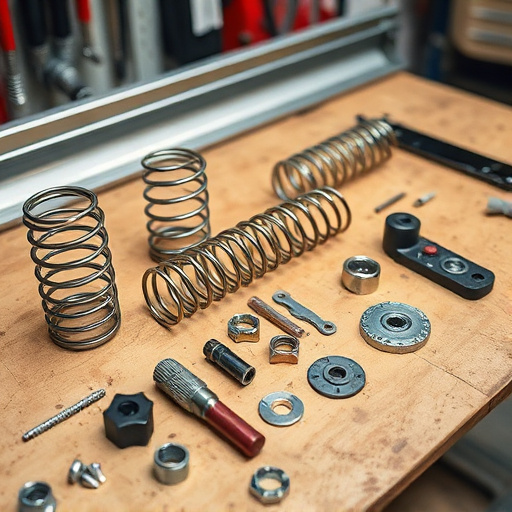
Broken garage door springs pose significant risks to homeowners and professionals alike. Springs, responsible for balancing and opening your door, operate under immense pressure, making them prone to failure. When a spring breaks, it releases this pressure suddenly, often resulting in dangerous projectiles and potential injuries. This is why understanding the dangers involved in handling broken springs is crucial. In this article, we'll explore why professional assistance is vital when dealing with faulty springs, focusing on the safety implications and the time typically needed for efficient repairs, ensuring your peace of mind and the safety of your family and property.
- Understanding the Risks of Broken Springs
- The Impact of Spring Repair Timings
- Safe Handling Practices for Broken Springs
Understanding the Risks of Broken Springs
Broken garage door springs pose significant risks to homeowners and professionals alike. Spring failure can lead to unexpected accidents, injuries, and property damage. Understanding these risks is crucial for both Tucson homeowners and a licensed Tucson garage door company. When a spring breaks, it loses its ability to support the door, causing it to fall suddenly. This can result in severe lacerations or contusions, especially if the door falls on a person. Broken springs can cause doors to become unbalanced, leading to additional hazards.
The longevity of a spring is directly related to several factors, including the door's weight and the spring's cycle rating. Heavier doors require stiffer springs, which can wear out faster, especially in hot climates. A 150-pound door in Tucson might need a high-rated spring to maintain stability during the summer heat, but even these springs have limits. Powder-coated springs, while aesthetically pleasing, can be more susceptible to rust and corrosion, affecting their cycle rating and overall performance. A local Tucson garage door specialist recommends inspecting springs annually and replacing them every 5,000 to 10,000 cycles, depending on the door weight and climate.
Handling broken springs requires a certain level of skill and caution. Attempting DIY repairs can be dangerous if you're unfamiliar with the process. Winding a broken spring can lead to severe cuts or pinched fingers. Professional services, like those offered by a local garage door repair company, employ specialized tools and training to safely remove and replace springs. They also have access to a wider range of spring types, including extension and torsion springs, which serve different door styles. It's essential to remember that spring repair time varies based on the complexity of the job. A simple single-door repair might take an hour, while a two-car door with extended springs could extend the service call steps and repair time to several hours.
The Impact of Spring Repair Timings
Broken garage door springs are a serious safety hazard that demand immediate professional attention. While some homeowners might be tempted to attempt a DIY repair, the risks far outweigh any perceived savings. Spring repair is not a task to be taken lightly, as improperly handling a broken spring can result in severe injury or property damage. A single, high-tension spring can exert several thousand pounds of force, enough to crush fingers, hands, or even dislocate joints. Springs can store energy long after they're broken, posing a risk for anyone venturing near the door.
The timeliness of spring repair is a critical factor in mitigating these risks. In hot Tucson climates, the life expectancy of springs can be reduced, necessitating more frequent replacements. A licensed Tucson garage door specialist, like those serving the communities of Marana and Vail, emphasizes the importance of prompt service. When a spring breaks, it's crucial to avoid attempting a repair until a professional can assess the situation. Improperly wound springs or those left hanging loosely can cause unexpected snaps, potentially injuring anyone nearby.
The process of spring repair involves several steps, each requiring skill and expertise. First, the damaged spring is removed, often with the aid of specialized tools and a systematic unwinding process. Once the old spring is safely secured, a new spring is installed, sized according to the door's weight and other factors. The new spring is then carefully wound, often using winding cones to ensure even tension. After installation, the door's balance is adjusted, and any necessary safety features, like extension spring safety cables, are checked. This meticulous process typically takes one to two days, depending on the complexity of the repair and the accessibility of the door.
A key consideration in spring repair is the potential for rust and corrosion, especially in the Tucson heat. Oil-tempered springs are often recommended over galvanized ones for their superior resistance to corrosion. Regular maintenance, including lubricating the springs, can also extend their lifespan. However, once a spring begins to show signs of failure, such as a distinctive broken spring sound or visible signs of wear, it's time to call a professional. Waiting too long can lead to catastrophic spring failure, putting lives and property at risk.
Safe Handling Practices for Broken Springs

Broken garage door springs are not a minor inconvenience; they represent a significant safety hazard. Attempting to handle or replace a broken spring without proper training and equipment can lead to serious injury or property damage. This is particularly true for heavy doors, which often require powerful springs to operate. A door weighing over 200 pounds might need a spring with an inside diameter of 1.75 inches or more, and these powerful springs can snap with immense force.
The first step in safe handling practices is to understand the types of springs and their functions. Extension springs, common in older doors, extend and contract to balance the door, while torsion springs, often found in modern doors, twist to provide the lifting force. High-cycle springs, designed for heavy use, have a longer lifespan but pose a greater risk when damaged. An experienced Tucson garage door installer recommends always leaving spring repairs to professionals, especially when dealing with oil-tempered or galvanized springs, which can be hazardous if not handled correctly.
When a spring breaks, it often makes a distinctive, loud noise. This is a clear sign that the spring is failing and should be treated as an emergency. Never attempt to fix it yourself; instead, contact a local garage door repair service immediately. The repair process involves several steps, including disassembling the door, removing the broken spring, and installing a new one. Depending on the door's complexity and the type of spring, the whole process can take anywhere from one to two days. Always remember, safety is paramount when dealing with garage door springs.
Frequently Asked Questions About safety advice on why broken springs are dangerous to handle
Why are broken garage door springs considered dangerous? Broken garage door springs, particularly those that support heavy doors, can snap suddenly and launch at high speeds. This poses a significant risk of severe injury or property damage. They are considered dangerous because they store immense energy and, when released, can cause impacts exceeding 100 miles per hour. Never attempt to handle or adjust them yourself; always call a licensed professional.
Can I safely remove a broken spring myself? No, it's not safe to remove a broken garage door spring yourself. These springs are under immense tension, and handling them requires specialized tools and knowledge. Improper removal can lead to injury or further damage to the door or its components. Rely on a licensed Tucson garage door specialist like Eddies Garage Door Service for safe removal and replacement.
What happens if I ignore the broken spring? Ignoring a broken garage door spring can lead to several issues. The door may become inoperable, requiring a costly repair or replacement. Worse, the broken spring can pose a safety hazard, especially if it's near children's play areas or high-traffic zones. Always address a broken spring promptly to maintain door functionality and safety.
How do broken springs affect the door's balance? Broken or weakened springs can impair the door's balance, making it difficult to open or close smoothly. This imbalance can strain other door components, potentially leading to additional failures. A professional will replace the spring(s) to restore proper balance and ensure the door operates safely and efficiently.
Are there any DIY solutions for a broken spring? While some basic garage door repairs are DIY-friendly, replacing a spring is not one of them. Springs require specialized knowledge and tools, and incorrect installation can be dangerous. It's best to invest in professional repair to ensure the job is done safely and correctly. Most installations take one to two days, with the cost varying based on the door size and spring type.
What should I do if a spring breaks while the door is open? If a spring breaks while the door is open, immediately stop the door's movement and contact a professional. Do not attempt to close the door manually, as it could snap back and cause injury. A local Tucson garage door technician will safely secure the door and replace the spring as needed.
Can broken springs be repaired, or do I always need replacement? While repairs are possible for minor issues like a frayed wire or bent spring, a complete break usually requires replacement. A Tucson garage door specialist will assess the damage and recommend the best course of action, ensuring your door is safe and reliable.
Handling broken garage door springs is a critical task that demands utmost caution due to the potential for severe injuries and property damage. As this article has highlighted, the risks associated with broken springs are multifaceted, from the immediate danger of spring failure to the long-term effects of heat and corrosion. Understanding the differences between torsion and extension springs, the necessity of replacing both if either fails, and the factors influencing spring life, such as door weight and climate, is crucial for safe and effective repairs.
The timing of spring repairs is also a significant consideration. Delays can lead to more extensive damage and higher costs. Waiting too long can result in a total door replacement instead of a simple spring swap. The process of spring repair, including disassembly, reassembly, and balancing, typically takes one to two days, depending on the complexity of the door and the spring type. This highlights the importance of prompt attention to broken springs to minimize downtime and ensure safety.
Practical steps for the future include regular spring maintenance, such as lubricating pins and wheels, and staying informed about local building codes and safety standards. Homeowners should consider the materials used in spring construction, opting for oil-tempered or high-cycle springs where appropriate, to extend their lifespan. By adhering to these guidelines, Tucson homeowners can enjoy safer, more reliable garage door systems, reducing the risk associated with broken springs.
Broken Garage Door Springs: A Safety Hazard and What to Do
Broken garage door springs pose significant risks, including sudden door falls, lacerations, contusions, and door imbalance. Spring longevity depends on door weight, climate, and cycle rating, with hot Tucson climates reducing lifespan. DIY repairs are dangerous; professional services use specialized tools and training for safe removal and replacement. Repairs can take 1-2 days, depending on door complexity and spring type. Oil-tempered springs are recommended over galvanized ones for corrosion resistance. Always contact a licensed garage door company for repairs, especially with heavy doors and high-cycle springs. Safety is paramount when dealing with garage door springs.